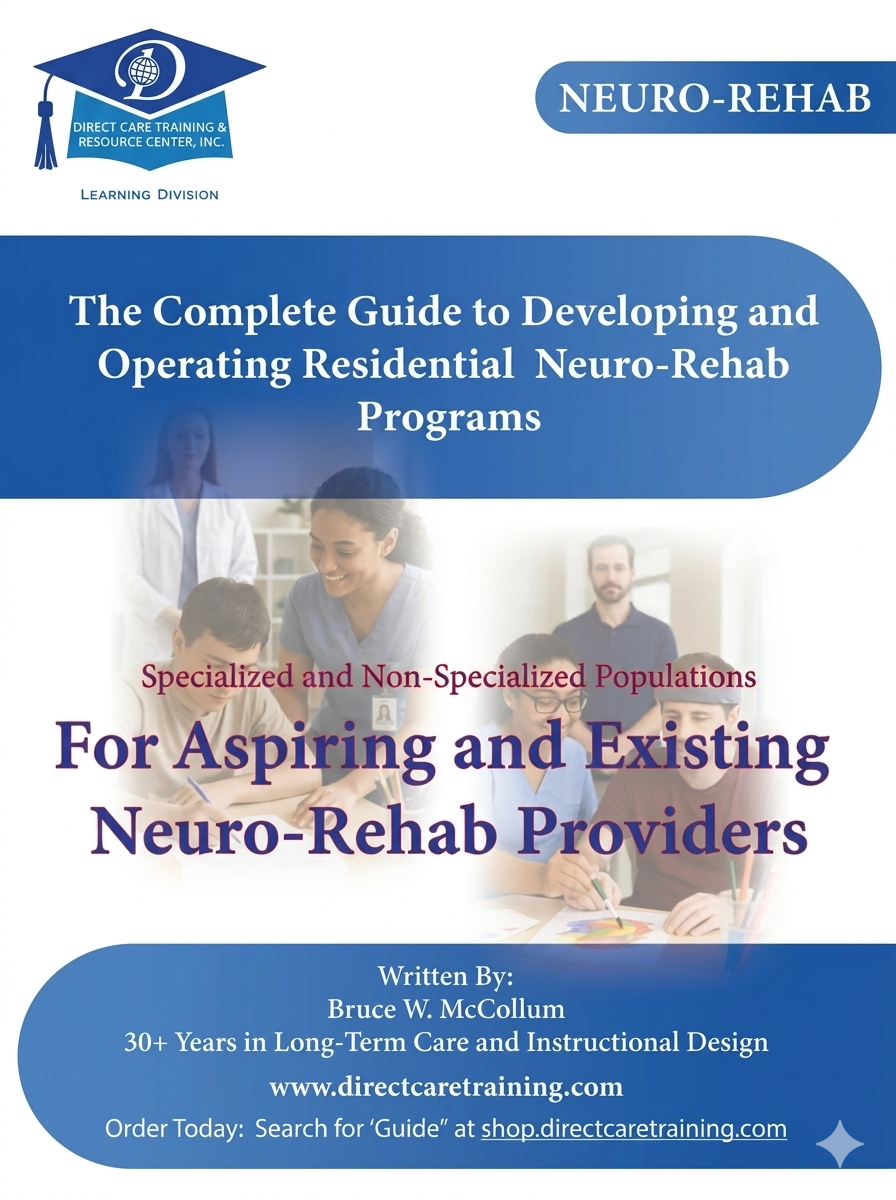
Neurological Cognitive Day-Time Rehabilitation: An Operations Guide
Direct Care Training & Resource Center, Inc.
Delivered as a PDF via Email Upon Purchase
Neurological Cognitive Day-Time Rehabilitation (NCDTR) is a vital service model for individuals recovering from brain injury, stroke, neurodegenerative disease, and other cognitive impairments. This operations guide was developed to support providers in building and strengthening structured, outcome-driven programs that help participants regain cognitive function, improve emotional regulation, and increase day-to-day independence.
Written from an operational and clinical best-practice perspective, this guide delivers a clear blueprint for designing a professional Neuro-Cog day program—covering ideal program structure, staffing needs, documentation protocols, progress evaluation systems, and payer navigation for long-term sustainability.
This guide includes:
✅ Ideal Program Structure
Learn how to build a well-balanced NCDTR program that integrates:
individualized rehabilitation plans
structured daily cognitive activities
a therapeutic, safe environment
routine assessment and treatment plan adjustments
✅ Meaningful Neuro-Cognitive Program Activities
A robust library of cognitive rehabilitation activities designed to stimulate and evaluate functioning, including:
memory matching, story recall, reminiscence therapy
puzzles, word association, sequencing tasks
attention training, impulse-control games
communication practice, facial expression recognition
reality orientation and problem-solving scenarios
✅ Needed Professionals & Team Roles
Guidance on building an effective multidisciplinary team, including:
program director oversight and compliance leadership
neuropsychology/psychiatry support for cognitive-behavioral needs
PT/OT/SLP coordination for functional rehabilitation
social work and case management to support participants and families
✅ Billing Critiques & Payment Navigation
Practical insight into managing reimbursement systems and payer requirements, including:
Medicaid and Medicare considerations
workers’ compensation billing expectations
Michigan No-Fault and other insurance structures
coding considerations such as CPT 97129 and 97130 and documentation alignment
✅ Documentation Protocols That Support Medical Necessity
Step-by-step guidance for operational documentation that supports continuity and reimbursement:
initial neuro-cognitive intake assessments
progress notes and treatment adjustments
discharge summaries and transition planning
documentation practices that withstand payer review
✅ Evaluating Progress & Strengthening Outcomes
Tools and methods to track both quantitative and qualitative improvement, using structured evaluations plus therapist and case manager reports. Includes guidance on managing:
physician orders
Letters of Medical Necessity (LMNs)
treatment planning tied to functional outcomes
✅ Appendix: Coverage Strategy & “National Disability Guidelines” Clarity
A detailed breakdown of how cognitive rehabilitation aligns (or does not align) with commonly cited “national disability guidelines,” plus how to defend services using field-specific standards and benchmarks.
📌 Disclaimer Notice: This guide is provided for educational and operational guidance purposes only and is not a substitute for medical, legal, or regulatory advice. Providers must consult applicable regulations, payer policies, and qualified clinical judgment when implementing neuro-cognitive rehabilitation services.


Reviews
There are no reviews yet.